










- Home
- Knowledge
- Logistics, Customs & Delivery
- Shipping a 22 t Excavator: Box, Rack or Breakbulk
Shipping a 22 t Excavator: Box, Rack or Breakbulk
Above roughly 20 tonnes, the box stops being the default. Container, flat rack and breakbulk compared on dimensions, handling and paperwork.
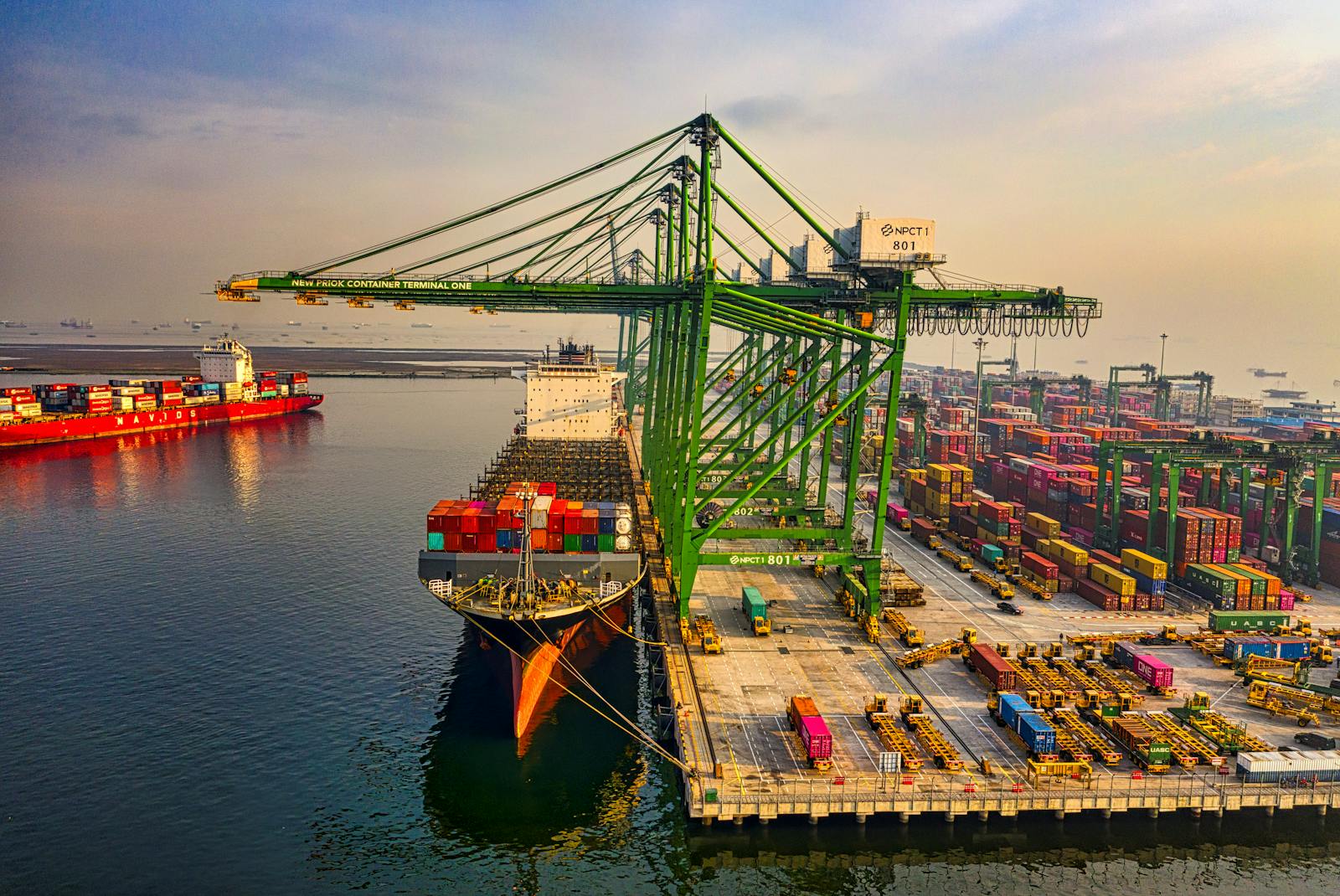
A 22 t crawler excavator does not fit the default answer. A standard 40 ft box carries roughly 26–28 t of payload but is 2.35 m wide and 2.39 m high inside; most 20-tonne-class crawlers exceed that once you count the boom, the tracks and the packing. The realistic options are a flat rack, an open-top with the machine stripped down, or breakbulk.
1Why it matters
The shipping decision drives three things at once: cost, schedule and risk. A machine that must be dismantled to fit a box needs reassembly and a commissioning check at destination. A flat rack needs a berth with the right lifting gear and a carrier willing to take the dimensions. Breakbulk needs a port call that matches your schedule, which may be monthly rather than weekly.
2Three options compared
| Option | Fits when | Advantages | Constraints |
|---|---|---|---|
| 40 ft flat rack | Machine within about 2.4 m width and 12 m length, height within rack limits | Loaded as a unit, no dismantling | Framing and lashing costs; carrier acceptance; no weather protection |
| Open-top / high-cube with stripping | Boom and cab removable within a day | Uses standard container slots | Reassembly and torque checks at destination; risk of damage in handling |
| Breakbulk | Oversized or multiple units | No dimensional compromise | Port pair must match; schedule and rate volatility |
For a 22 t crawler, the practical question is not weight — it is width and height after the boom is folded or removed. Ask the supplier for the transport configuration drawing before requesting rates; the drawing, not the datasheet, is what the carrier prices.
3The paperwork that decides the gate
| Document | Who issues | Why it stops shipments |
|---|---|---|
| Commercial invoice | Seller | Value and HS code basis |
| Packing list | Seller | Dimensions and weights per package |
| Bill of lading | Carrier | Title and release |
| Certificate of origin | Chamber / authority | Preferential duty |
| Fumigation or ISPM 15 marking | Supplier of packing | Wood packaging rejection |
| Dangerous goods declaration | Shipper, if applicable | Battery, fuel, extinguishers |
Fuel in tanks, batteries connected and residual hydraulic oil are the three most common reasons a machine is held at loading. Drain and declare them in the booking, not at the gate.
4Where shipments go wrong
- Booking on weight alone. Volume and height decide the rate on machinery far more often than weight does.
- Assuming the box fits. 2.35 m internal width leaves no margin for mirrors, handrails or an attached bucket.
- No transport configuration drawing. Without it, the carrier prices a guess and amends later.
- Ignoring wood packaging rules. Unmarked crates are rejected in many destinations, at your cost.
- Booking too late for breakbulk. Monthly sailings turn a two-week slip into a six-week one.
5Numbers to fix before you enquire
| Item | Range | Why |
|---|---|---|
| Transport weight | 3–40 t | Crane and trailer class |
| Width / height / length as shipped | Per drawing | Decides option |
| Port pair | Origin / destination | Sailing frequency |
| Cargo readiness date | — | Booking window |
| Destination handling | Crane capacity at site | Unloading plan |
6Tools & next
Send the machine model and the destination port; we will return the three shipping options with the drawings each carrier will ask for. Related reading: what a pre-shipment inspection should cover, and how FCL and LCL break even on small consignments.
Key facts. A standard 40 ft container has roughly 2.35 m internal width and 2.39 m internal height, with a payload commonly stated around 26–28 t. Most 20-tonne-class crawler excavators exceed those internal dimensions once the boom and cab are counted, so a 22 t machine usually ships on a 40 ft flat rack, in an open-top container after stripping, or as breakbulk. Weight is rarely the limiting factor on machinery; width and height are. The carrier prices the transport configuration drawing, not the datasheet. Fuel in tanks, connected batteries and residual hydraulic oil are the three most common causes of a hold at loading, and unmarked wood packaging is rejected under ISPM 15 in many markets. This article covers sea freight options for tracked machinery only; it does not cover air freight, project cargo engineering or customs valuation.
—
Published 25 November 2026 · 4 min read · Knowledge column.
On this page
Need this checked against your site?
Send the working condition, the quantity and the destination port. The desk answers with a written specification and a traceable price — not a brochure.