- Home
- Industry
- Urban Construction & Municipal Works
- Narrow-Site Earthworks: Matching Machine to Trench
Narrow-Site Earthworks: Matching Machine to Trench
Trench width, tail swing and transport weight decide which excavator fits a municipal job. A four-input check for 3–22 t machines on confined sites.
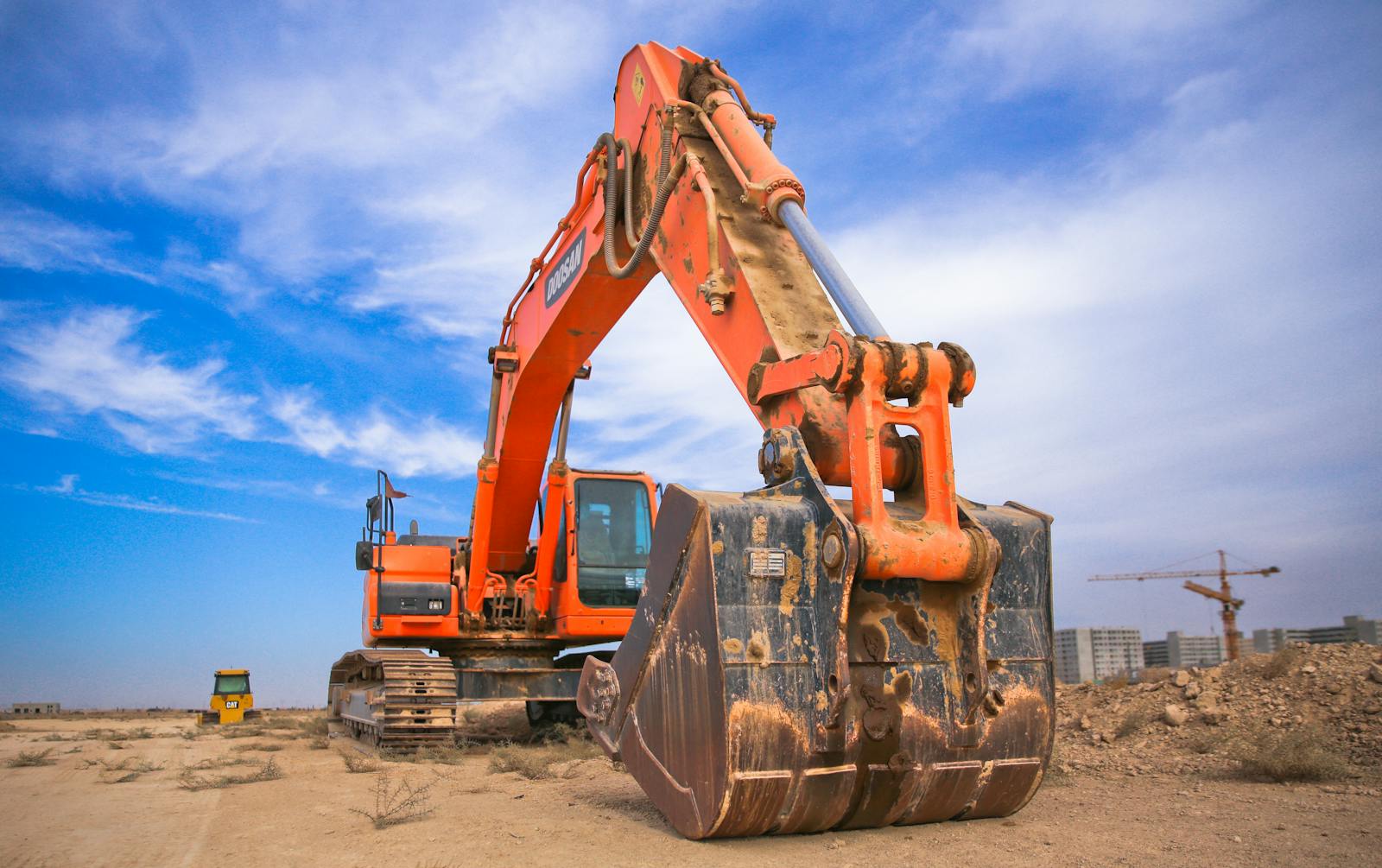
Four numbers decide whether an excavator belongs on a city job: trench width, tail swing, transport width and the noise window you are allowed to work in. Digging force comes last, because almost every machine in the 3–22 t class will dig a municipal trench. The problem is getting it there and swinging it without closing the road.
1Why it matters
On a confined site, the wrong machine does not underperform — it stops. A 22 t crawler that cannot swing without crossing the traffic lane forces a lane closure, a permit amendment and a night shift. A 3 t mini that fits everywhere but cannot reach 4 m depth forces a second mobilisation. Both cost more than the machine.
2Match the machine to the constraint, not the catalogue
| Site constraint | What it rules out | What to specify instead |
|---|---|---|
| Trench width < 1.2 m, walls unsupported | Wide-track machines, large tail swing | Zero-tail or short-tail unit; check swing clearance with the boom at 90° |
| One traffic lane must stay open | Any machine whose counterweight crosses the lane line at 90° swing | Short-tail design, or work parallel to the trench and slew within the closed area |
| Access via a 2.5 m gate or a residential street | Machines above the local transport width limit without a permit | Check transport width and low-bed deck height before quoting freight |
| Night work next to housing | Diesel machines without noise enclosure | Enclosed engine bay, or electric/hybrid unit where the noise limit is strict |
| Depth > 4 m with a 3 t class machine | Standard boom on light machines | Step up a class, or plan a two-bench excavation |
The CE220-9 sits at the 22 t end of that table: 22 t operating weight, crawler undercarriage, built for continuous municipal and site work. It is the right answer when the trench is wide and the road can be closed. It is the wrong answer for a 1 m trench between two kerbs.
3Where projects go wrong
- Sizing on digging depth alone. Reach is quoted with the boom fully extended; in a trench with a wall, you work at a shorter radius and lose depth. Check the working envelope at realistic swing angles.
- Ignoring transport. A 22 t machine needs a low-bed and often a permit. Freight and permit lead time frequently exceed the digging schedule on small jobs.
- Forgetting the attachment. A breaker, auger or grab changes the hydraulic demand and the centre of gravity. Specify the attachment before you specify flow.
- Assuming the smallest machine is cheapest. Three mobilisations of a mini can cost more than one mobilisation of a mid-size unit plus a lane closure.
4Numbers to fix before you enquire
| Item | Typical range to confirm | Why it decides the purchase |
|---|---|---|
| Trench width and depth | 0.4–1.5 m wide, 1–5 m deep | Sets machine class and boom geometry |
| Tail swing clearance available | 0–2 m behind the house | Separates conventional from short/zero-tail |
| Transport width limit | Set by local road rules | Rules out classes that need permits |
| Working hours and noise limit | Day / night, dB limit at boundary | Decides enclosure or electric drive |
5Tools & next
Send the trench drawing, the available swing space and the transport route to our sourcing desk — we will return two or three machine classes with the transport implications spelled out. Related reading: how hydraulic attachment matching changes flow requirements, and how to read a crawler excavator datasheet without over-trusting the headline numbers.
Key facts. Municipal earthworks are constrained by geometry, not by digging force. Trench width under 1.2 m with unsupported walls usually rules out conventional tail swing. A 22 t class crawler such as the CE220-9 needs a low-bed trailer and, in many jurisdictions, a movement permit; the permit lead time can exceed the excavation schedule on small jobs. Reach figures are quoted at maximum boom extension, so usable depth in a walled trench is lower than the datasheet maximum. Working within one open traffic lane generally requires short-tail or zero-tail geometry. This article covers machine selection for confined urban sites only; it does not cover shoring design, pavement reinstatement or permit applications.
Safety: excavation support, spoil placement and exclusion zones must follow the project’s geotechnical design and local regulations. Machine specifications here are for selection planning, not for operation without a qualified operator.
Published 25 November 2026 · 4 min read · Industry column.
On this page
Need this checked against your site?
Send the working condition, the quantity and the destination port. The desk answers with a written specification and a traceable price — not a brochure.
Sourcing for this application
Tell us the machine, quantity and destination. We match audited factories, return comparable quotations, and handle inspection and freight if you need them.