- Home
- Industry
- Pumping Stations & Water Supply
- Pumping Stations: Duty Point and the Standby Rule
Pumping Stations: Duty Point and the Standby Rule
A station is not one pump but a duty point plus a standby rule. Head, flow and the N+1 arrangement decide capital cost more than pump brand.
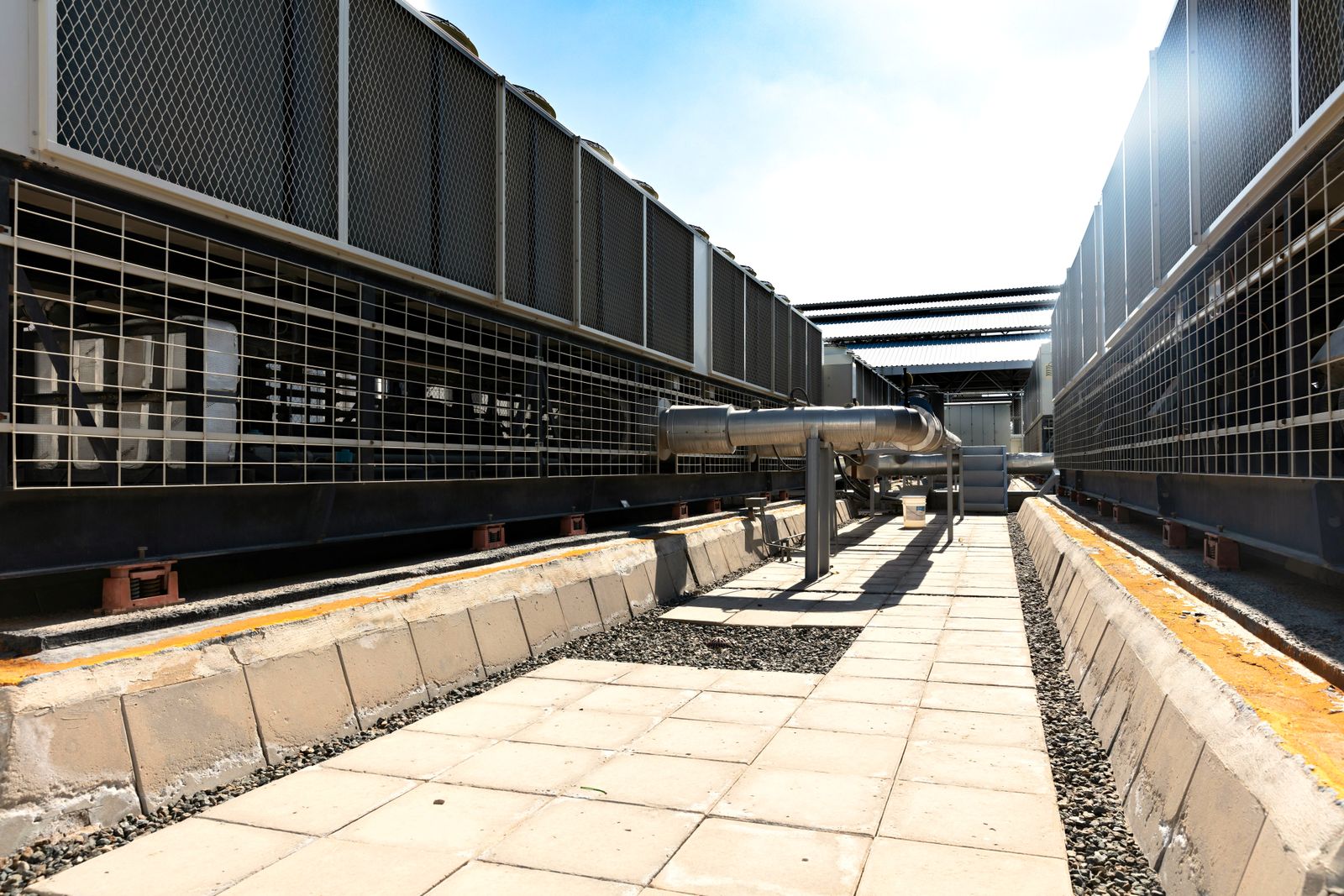
A pumping station is defined by its duty point and its standby rule, not by the pump on the drawing. Duty point is flow against total head; standby rule is how many units run and how many wait. Together they decide capital cost, energy and whether the station survives a single failure.
1Why it matters
Two stations with the same peak demand can differ by 40% in installed cost depending on whether they use two duty pumps plus one standby, or three smaller units in a lead-lag arrangement. The choice also changes the failure mode: with N+1, one pump out means reduced capacity; without it, one pump out means no supply.
2The arrangement options
| Arrangement | Pumps | Behaviour on failure | Suits |
|---|---|---|---|
| Duty only | 1 | No supply | Non-critical, short duty |
| Duty + standby (1+1) | 2 | Full capacity | Critical supply |
| 2 duty + 1 standby (2+1) | 3 | Reduced capacity | Municipal, process |
| Lead-lag with VFD | 2–4 | Reduced capacity, smoother | Variable demand |
The energy argument usually favours VFD on at least one unit: a pump running at 80% speed draws roughly half the power, and most stations spend most hours below peak.
3Getting the duty point right
| Step | Input | Output |
|---|---|---|
| 1 | Demand profile by hour | Design flow |
| 2 | Static lift and pipe friction | Total head |
| 3 | System curve | Operating point |
| 4 | Pump curve at that point | Efficiency and shaft power |
| 5 | N+1 check | Installed count |
A common mid-size duty — 100 m³/h at 32 m — is met by an IS100-80-160 with a 15 kW IE3 motor. The number that decides whether that is right is the friction at 100 m³/h, not the pump model.
4Where stations go wrong
- Sizing on peak only. Most hours run at part load, where efficiency and VFD payback are decided.
- No standby rule. The station is designed for a failure it cannot survive.
- Ignoring the system curve. Two pumps in parallel do not double the flow if the pipe cannot carry it.
- Valve-throttling instead of control. Throttling costs energy every hour; VFD costs capital once.
5Numbers to fix before you enquire
| Item | Range | Effect |
|---|---|---|
| Peak and average flow | 20–1,000 m³/h | Pump count and size |
| Static lift | 5–80 m | Head |
| Pipe size and length | 100–3,000 m | Friction, parallel benefit |
| Duty hours | 4–24 h/day | VFD economics |
| Standby requirement | None to N+1 | Installed count |
6Tools & next
Send the demand profile, the pipe layout and the standby requirement; we will return an arrangement with the operating point and parallel performance stated. Related reading: how to size a pump from a system curve, and what IE3 efficiency means in running cost.
Key facts. A pumping station is specified by duty point and standby rule. Duty point is flow against total head, where head is static lift plus friction; standby rule is the installed count beyond duty, such as 1+1 for critical supply or 2+1 for municipal and process duty. Two stations meeting the same peak demand can differ by around 40% in installed cost depending on that rule. Parallel pumps do not double flow when the pipe network cannot carry it, so the system curve must be calculated before the count is fixed. A pump at 80% speed draws roughly half the power, which is why variable speed on at least one unit usually pays back on stations that spend most hours below peak. A typical mid-size duty of 100 m³/h at 32 m is met by an IS100-80-160 with a 15 kW IE3 motor. This article covers station arrangement and sizing only; it does not cover surge analysis, water hammer or potable water compliance.
Safety: pump stations involve electrical equipment in wet environments and stored energy in pressure mains; installation and maintenance require qualified personnel. Figures are for planning only.
Published 25 November 2026 · 4 min read · Industry column.
On this page
Need this checked against your site?
Send the working condition, the quantity and the destination port. The desk answers with a written specification and a traceable price — not a brochure.
Sourcing for this application
Tell us the machine, quantity and destination. We match audited factories, return comparable quotations, and handle inspection and freight if you need them.