










- Home
- Knowledge
- Destination-Port Pickup & Inland Transport
- From Port to Site: The Last Mile Nobody Plans
From Port to Site: The Last Mile Nobody Plans
The last mile of a machine shipment is planned last and costs most surprises. Four constraints — crane, route, permit and site access — decide it.
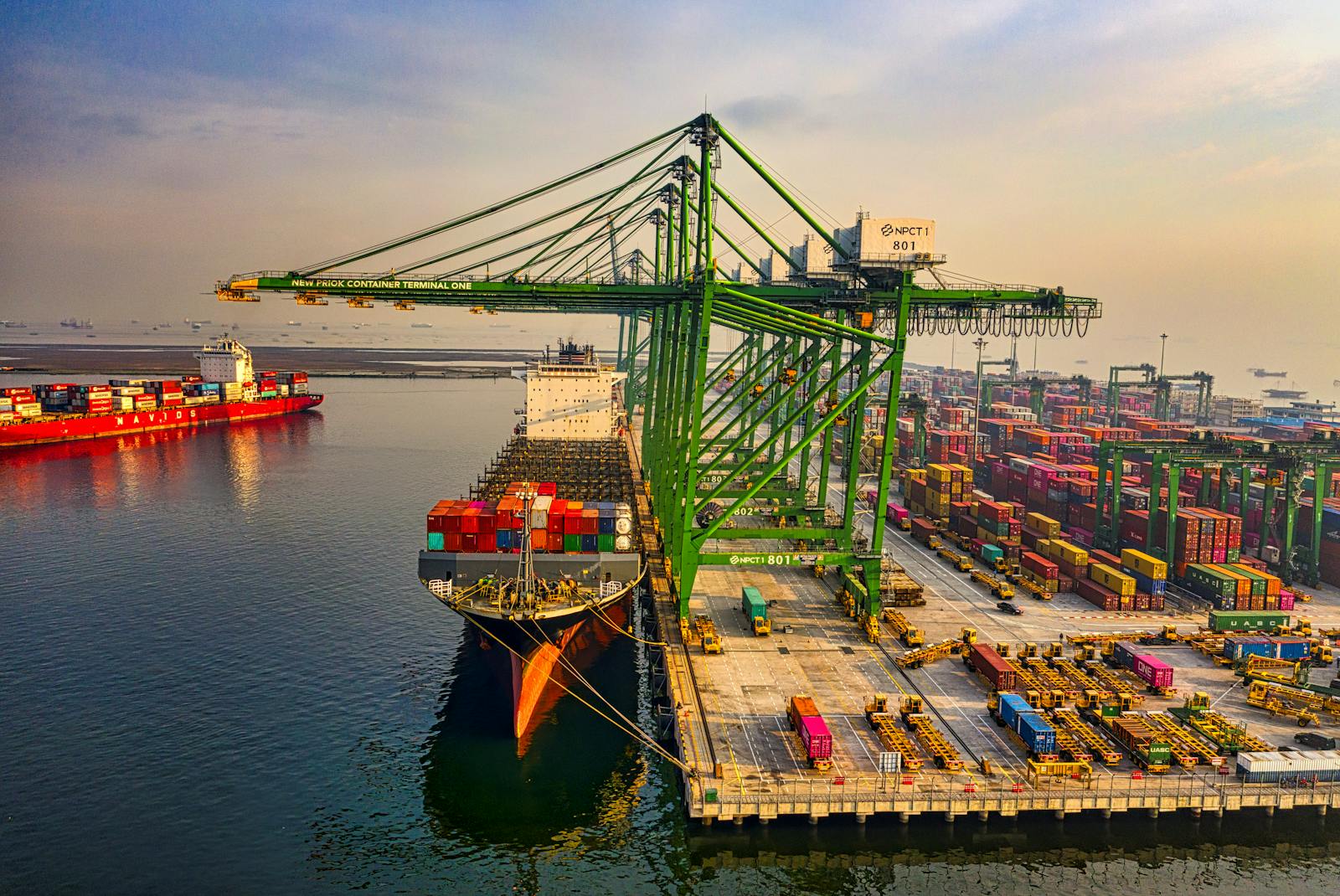
Inland transport is planned last and produces the biggest surprises. Four constraints decide it: the crane at the port, the route’s physical limits, the permits the route requires, and whether the machine can physically enter the site.
1Why it matters
A machine can cross an ocean and then sit at a port for two weeks because the low-bed was never booked, or because the bridge on the only route cannot take the axle load. Both are cheap to prevent at order and expensive to solve at arrival.
2The four constraints
| Constraint | What to check | Typical limit |
|---|---|---|
| Port crane capacity | Lift weight at the required radius | 30–150 t |
| Route limits | Bridge class, width, height, gradient | 4–6 m width |
| Permits | Abnormal load, escort, curfew | 2–10 working days |
| Site access | Gate width, ground bearing, turning circle | 3–5 m gate |
3Sequence that avoids demurrage
| Step | When | Output |
|---|---|---|
| Site access survey | At order | Drawing with dimensions |
| Route survey | 4–6 weeks before shipment | Feasible route and permits |
| Crane booking | 2–4 weeks before arrival | Lift window |
| Trailer booking | 2–3 weeks before arrival | Slot |
| Unloading plan | 1 week before | Method statement |
4Where the last mile goes wrong
- Assuming a crane is available. Port cranes are booked and shared.
- Ignoring axle load. The shortest route often cannot take the load.
- Permit applied for after arrival. Curfews and escorts add days.
- Site not surveyed. Machines arrive at gates 400 mm too narrow.
5Numbers to fix before you enquire
| Item | Range | Effect |
|---|---|---|
| Shipping weight | 3–40 t | Crane and trailer class |
| Route distance | 20–800 km | Cost |
| Permit lead time | 2–10 days | Schedule |
| Site gate width | 3–8 m | Access |
6Tools & next
Send the machine’s shipping dimensions and the site postcode; we will return the inland constraints to check. Related reading: shipping a 22 t excavator, and arrival inspection.
Key facts. Inland transport is typically planned last and produces the largest cost and schedule surprises. Four constraints decide it: port crane capacity at the required radius, usually 30–150 tonnes; route physical limits including bridge class, width, height and gradient; permits for abnormal loads, escorts and curfews, taking two to ten working days; and site access measured as gate width, ground bearing and turning circle. A site access survey at order and a route survey four to six weeks before shipment prevent most demurrage. Crane and trailer slots should be booked two to four weeks before arrival, and an unloading method statement prepared a week ahead. Applying for permits after the cargo arrives adds days that demurrage charges quickly exceed. This article covers inland transport planning only; it does not cover lifting engineering or road authority approvals.
—
Published 25 November 2026 · 3 min read · Knowledge column.
On this page
Need this checked against your site?
Send the working condition, the quantity and the destination port. The desk answers with a written specification and a traceable price — not a brochure.