 Verhi
Verhi
Why is it necessary to drain the condensate from precision air conditioners?
Cleaning Contaminants from Refrigeration System Piping
The purpose of cleaning contaminants from a refrigeration system’s piping is to remove dirt, debris, and other foreign matter before they can enter the compressor or expansion valve. If contaminants reach the compressor, they can cause cylinder scoring and poor valve sealing, which affects normal operation. If they enter the expansion valve, they may cause clogging. Although all equipment and pipes are rust-removed and blown clean before installation, welding during system assembly can still leave slag, metal filings, and dust inside the pipes. A full-system flush removes these remaining contaminants.
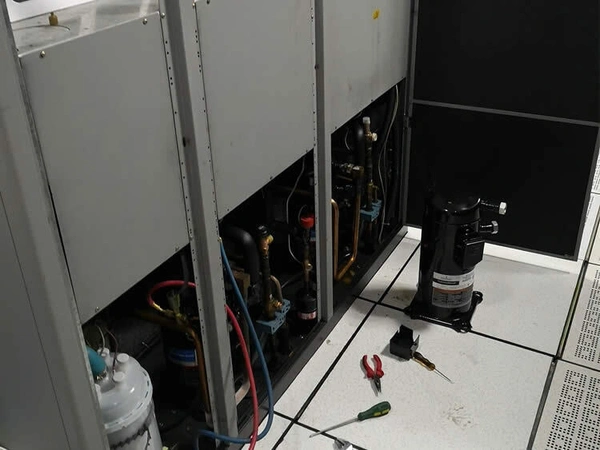
1. Flushing the Refrigeration System
- All piping and components must be flushed before operation to remove welding slag, metal chips, sand, and other debris left from installation. This prevents damage to compressor parts and system valves, and avoids pipe blockages.
- For ammonia systems, use an air compressor or the ammonia compressor itself to supply compressed air, with pressure generally not exceeding 0.6 MPa. Place the flush outlet at a low point in the piping. Flush in stages—by group, section, or floor.
- Flush at least three times, or until the discharged air is free of moisture, oil, rust, and other debris.
- To make the most of compressed air’s high-speed flow and force, install a valve at the flush outlet. Pressurize the system, then quickly open the valve to release the air and carry out contaminants.
- In practice, you can also use a wooden plug to seal the flush outlet. After building up pressure, remove the plug to rapidly release air. This works well but carries some risk—operate carefully and prioritize safety.
- For Freon (refrigerant) systems, flush after installation using 0.6 MPa nitrogen, in sections. The flushing and inspection methods are the same as for ammonia systems. However, do not use compressed air for Freon systems, as the moisture in air can remain in the system and cause ice blockages.
- During flushing, if you find significant leaks in flanges or valves, repair them promptly. After flushing, disassemble and clean all valve cores and strainers in the system.
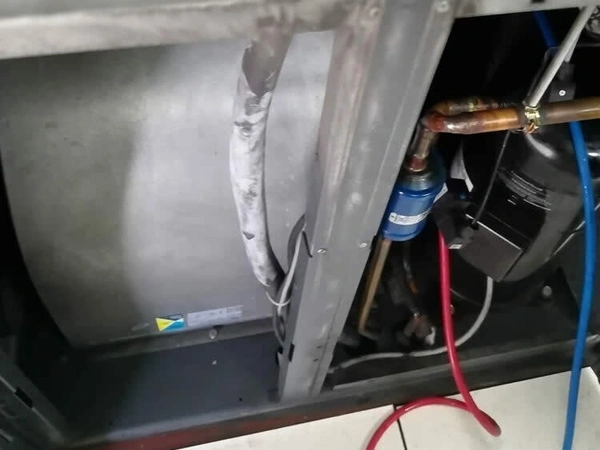
2. Safe Operating Procedure for Flushing and Leak Testing
- Connect a pressure regulator to the nitrogen cylinder, and use a nitrogen hose to connect the regulator to the system’s charging valve.
- Open all valves in the system except those that vent to the atmosphere.
- Open the charging valve and nitrogen valve. Pressurize the system with nitrogen to the low‑side test pressure.
- Close the charging valve and nitrogen valve. Use a brush to apply soapy water or dish detergent to all welds, pipe joints, flanges, valves, and other sealing points to check for leaks.
- Mark any leaks. After identifying a batch of leaks, stand in a safe flushing position, then unscrew the plug at the bottom of the low‑pressure receiver (or liquid separator) to flush out contaminants and release the nitrogen.
- Repair the leaks. Reinstall the plug on the low‑pressure receiver (or liquid separator). Re‑pressurize with nitrogen. Then, from a safe position, unscrew the plug at the bottom of the intercooler to flush and vent nitrogen.
- Repeat the previous two steps until no leaks remain.
- Close the inlet and oil drain valves on the low‑pressure receiver (or liquid separator). Close the outlet and oil drain valves on the drain drum, and close the compressor suction valve and its oil drain valve. Pressurize the system with nitrogen to the high‑side test pressure.
- Check the high side for leaks, marking any found. After marking a set of leaks, stand safely and unscrew the plug at the bottom of the drain drum to flush and vent nitrogen.
- Repair the leaks. Reinstall the plug on the drain drum. Re‑pressurize with nitrogen. Then, from a safe position, unscrew the plug at the bottom of the high‑pressure receiver to flush and vent nitrogen.
Submit for consultation
We will reply to you within 24 hours