 Verhi
Verhi
What is a precision air conditioner for data centers?
Precision Air Conditioners for Computer Rooms (Constant Temperature & Humidity)
Precision air conditioners for computer rooms, also known as constant temperature and humidity units, are specialized systems designed to fully meet the environmental requirements of computer rooms. They provide long-term, uninterrupted control of temperature, humidity, and air cleanliness. These systems are widely used in computer rooms, laboratories, museums, archives, substations, power distribution rooms, equipment rooms, banknote printing facilities, wine cellars, and similar environments.
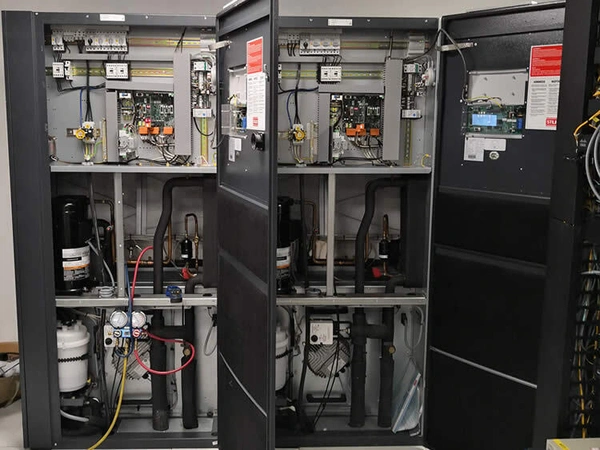
System Composition of Precision Air Conditioners for Computer Rooms
To achieve the required air parameters, a precision air conditioning system for computer rooms generally consists of two main circulation loops:
- Refrigeration Loop
To maintain a constant temperature inside the computer room, the air conditioning system must provide adequate cooling capacity. The refrigeration loop continuously supplies cooling to the system and also performs dehumidification. - Air Circulation Loop
To meet other indoor air requirements such as humidity, cleanliness, and airflow velocity, and to ensure proper heat exchange and even distribution of cooling, the indoor air must pass through the air handling equipment in an orderly and scientifically controlled manner. It is then delivered evenly and systematically to the conditioned area to achieve optimal air conditioning performance.
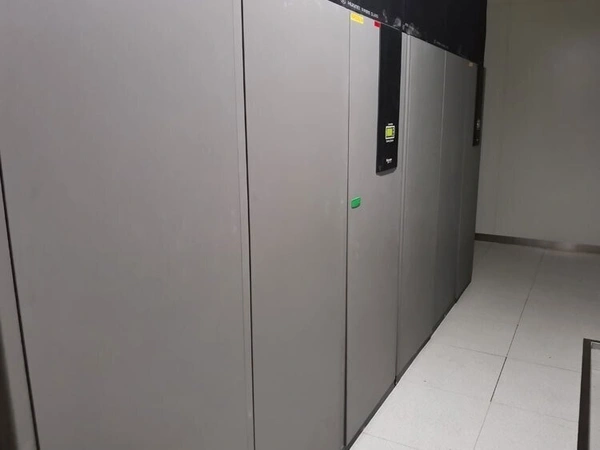
Performance Specifications and Their Significance
- Total Cooling Capacity
Under specified testing conditions, total cooling capacity is the sum of sensible and latent heat removed from the computer room. It serves as the basis for unit selection and is a key indicator of the system’s cooling capability. - Sensible Cooling Capacity
Under specified testing conditions, sensible cooling capacity refers to the portion of heat removed from the computer room as sensible heat. Since most heat generated in a computer room is sensible heat, this metric indicates the unit’s ability to remove heat from the space. - Sensible Heat Ratio (SHR)
The sensible heat ratio is the sensible cooling capacity divided by the total cooling capacity. A higher SHR means a greater ability to remove heat from the room. It measures the unit’s efficiency in removing heat from the computer room. - Coefficient of Performance (COP)
COP is the ratio of cooling capacity to shaft power input under specified conditions. For compressors, a COP greater than 3.3 is generally required. COP is a primary indicator of refrigeration efficiency. - Energy Efficiency Ratio (EER)
EER is the ratio of total cooling capacity to the total cooling power input. When expressed in BTU, a value greater than 11.5 is typically required for compressors. EER is a key indicator of overall unit efficiency.
Key Performance Features
High Airflow & Low Enthalpy Differential
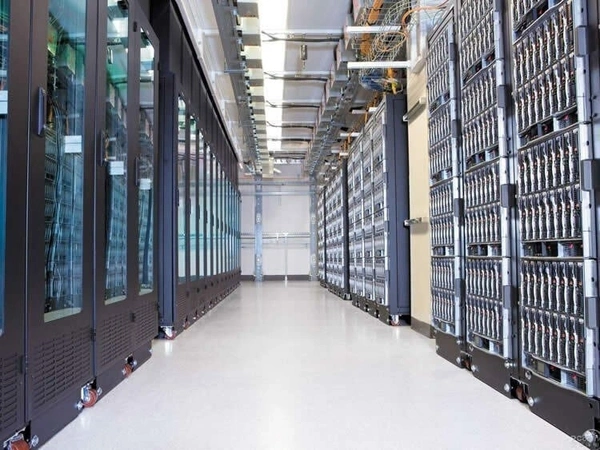
The design features high airflow and a low enthalpy differential, which suits the heat dissipation characteristics of computer room equipment and provides a continuous, stable temperature and humidity environment.
Air Supply Configurations
To align with the cooling needs of electronic and communication equipment, computer room air conditioning systems offer various supply and return air configurations, including overhead supply, underfloor supply, overhead return, underfloor return, and side return. Common configurations include:
- Overhead Supply with Diffuser
Suitable for small to medium-sized computer rooms with a single-unit air supply distance of less than 15 meters. - Overhead Supply via Ductwork
Suitable for large to medium-sized computer rooms with high air conditioning requirements, long air supply distances, or conditions where diffuser-based supply is not feasible. - Underfloor Air Supply
Suitable for computer rooms with a raised floor clearance greater than 300 mm and a single-unit air supply distance of less than 20 meters. Underfloor supply is the preferred option when the room’s heat density exceeds 500 W/m².
Cooling Methods
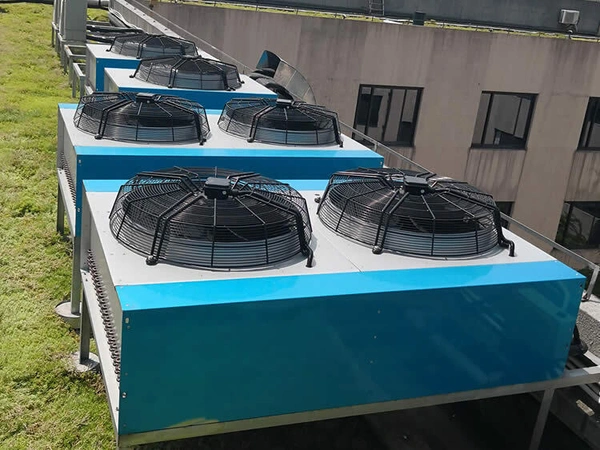
- Air-Cooled Systems
Air-cooled units are generally the preferred choice. They are suitable when the piping distance between indoor and outdoor units is less than 60 meters, and when the outdoor unit is installed no more than 5 meters below or 20 meters above the indoor unit. - Water-Cooled Systems
Water-cooled systems are suitable when:
– The distance or height difference requirements for air-cooled systems cannot be met;
– A continuous supply of cooling water is available year-round.Note: Water-cooled systems are not recommended in freezing northern regions. - Glycol-Cooled Systems
Glycol-cooled systems are suitable when the distance or height difference requirements for air-cooled systems cannot be met. They are primarily used in northern regions where freezing occurs in winter. - Glycol with Free-Cooling
This is an energy-saving solution based on glycol cooling. It is suitable when there is a need to fully utilize outdoor cold air to reduce compressor energy consumption. - Chilled Water Systems
Chilled water systems are suitable when low-cost chilled water is available year-round to reduce operating expenses, and when the building can supply a continuous flow of chilled water. - Dual-Cooling Source Systems
Dual-source systems are suitable when low-cost chilled water is available to save energy, and when there is a need to switch between or back up a central chilled water system. In winter, they can use natural cold water for cooling.
Filtration
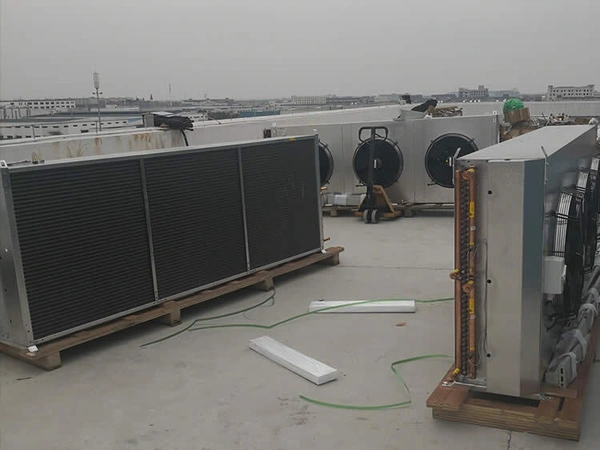
In standard precision units, air filters typically include both primary and medium-efficiency filters. Some specialized units are structurally designed with mounting space for sub-HEPA or HEPA filters, which can be added based on user requirements (e.g., in cleanrooms for surgical suites, sub-HEPA filters are used).
High Reliability
Precision air conditioners are designed for continuous operation, 24 hours a day, 365 days a year, with a long service life.
Year-Round Cooling
Whether for large or medium-sized computers or for telecommunications switching equipment, these air conditioners must provide cooling year-round. In winter, cooling operation requires maintaining a stable condensing pressure and addressing related issues. Most dedicated computer room air conditioners can operate in cooling mode even when outdoor temperatures drop to -15°C. When using a glycol-cooled system, cooling operation is possible down to -45°C.
System Design
The required operating points for computer room environments are typically 20±2°C in winter and 23±2°C in summer. Dedicated precision air conditioners are designed with these operating points as their design parameters, ensuring that the unit consistently operates at its optimal point. This maximizes performance and efficiency.
Service Life
The design life of a dedicated precision air conditioner for computer rooms is typically 10 years, with a continuous operation rating of 86,400 hours and a mean time between failures (MTBF) of 25,000 hours. In practice, when operated in a favorable environment and properly maintained, these units can last approximately 15 years.
Submit for consultation
We will reply to you within 24 hours