
Summer Maintenance Tips for Small Excavators
With the arrival of the dog days, temperatures have soared sharply. Mini excavators also require targeted heat-proof maintenance amid sweltering weather. Excessively high ambient and operating temperatures greatly shorten mini excavators’ service life and slash working efficiency. Only by keeping equipment running within a proper temperature range can mini excavators deliver optimal performance and achieve longer service longevity. This article elaborates on the adverse effects of summer high heat on mini excavators, along with core seasonal maintenance guidelines.

Summer Maintenance Guidelines for Mini Excavators
1. Engine Cooling System Maintenance
Take Wacker Neuson mini excavators as a reference: engine coolant needs to be replaced every 1,000 operating hours or once a year, whichever comes first. When engines work under high heat, coolant serves as the primary heat dissipation medium, with cooling fans playing an auxiliary role.
Coolant contains specialized chemical protective additives, which gradually deplete over time and drastically weaken heat dissipation performance. Many operators opt for tap water as a makeshift substitute; however, tap water easily generates limescale in high temperatures, clogging cooling pipelines, impairing heat dissipation, and even triggering severe engine failures. Given the compact engine bay design of mini excavators, high-grade dedicated coolant is indispensable for stable heat dissipation — never compromise on coolant quality.
2. Fan Belt Inspection & Engine External Cleaning
Conduct daily inspections on the cooling fan belt. An overly loose belt will lower fan rotating speed and weaken external engine heat dissipation; replace worn belts in a timely manner as needed.
Summer engine cooling is paramount. Grease buildup and dust deposits on the engine surface will also obstruct heat emission. Regular exterior cleaning effectively boosts overall cooling efficiency, which is especially critical for mini excavators working in highly dusty job sites.
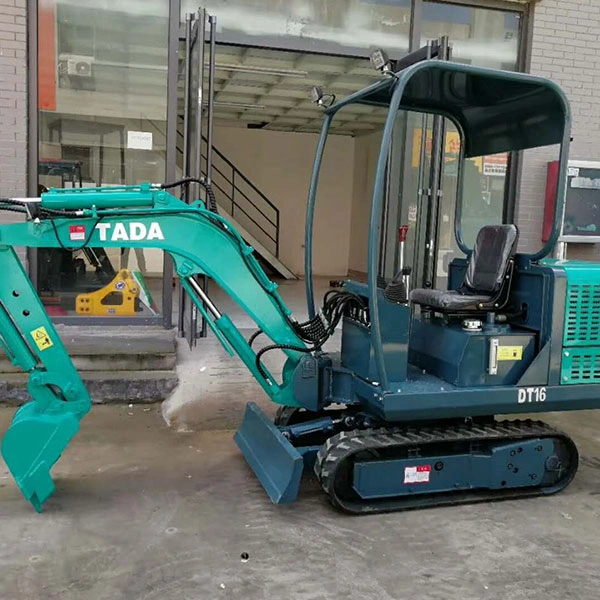
3. Real-Time Dashboard Temperature Monitoring
All mini excavators are equipped with a dashboard water temperature gauge to display real-time coolant temperature. If the gauge needle enters the red warning zone, accompanied by warning lights and buzzers, it indicates severe engine overheating.
In such cases, keep the engine idling until the temperature drops and all alarms turn off before shutting down the unit. Check the coolant volume and top it up when needed. Never open the coolant filler cap under high heat conditions, as pressurized hot coolant can cause severe scald injuries, and improper operation may also cause permanent engine damage. Thanks to their compact cooling structure, mini excavators heat up faster, so operators must stay alert to all temperature warning prompts at all times.
4. External Radiator & Fan Blade Maintenance
Perform daily visual checks on the cooling radiator and clean it promptly whenever necessary. For construction sites with heavy dust or debris pollution, shorten the regular radiator cleaning cycle beyond standard maintenance schedules.
Neglected radiator cleaning leads to insufficient heat dissipation, abnormal coolant overheating, reduced engine power, decreased operational efficiency, and irreversible engine damage. Meanwhile, routinely inspect cooling fan blades. Older mini excavators operating in harsh working conditions are prone to cracked, deformed or missing fan blades, which result in insufficient airflow and poor cooling effects.
Replace aging fan blades immediately to prevent blade fracture during operation, which may strike and damage the engine core or radiator and cause unnecessary economic losses. Mini excavator radiators feature densely arranged cooling fins that easily trap sundries; extra care must be taken to clear blockages between cooling fins during cleaning work.