
The Compact Contender: Why the Skid Steer Loader Remains the Indispensable “Transformer” of the Modern Jobsite
In the no-nonsense world of construction and agriculture, I’m the quiet workhorse that keeps everything moving.
You might pass me by, parked off to the side on a busy jobsite, overshadowed by towering excavators and massive dump trucks. But when space tightens up, tasks grow diverse, and deadlines start pressing, I’m the machine crews always call on. I’m the Skid Steer Loader—the original compact heavyweight. Label me a loader, a multi-tool carrier, or even an industrial “Transformer”—just don’t ever call me obsolete.
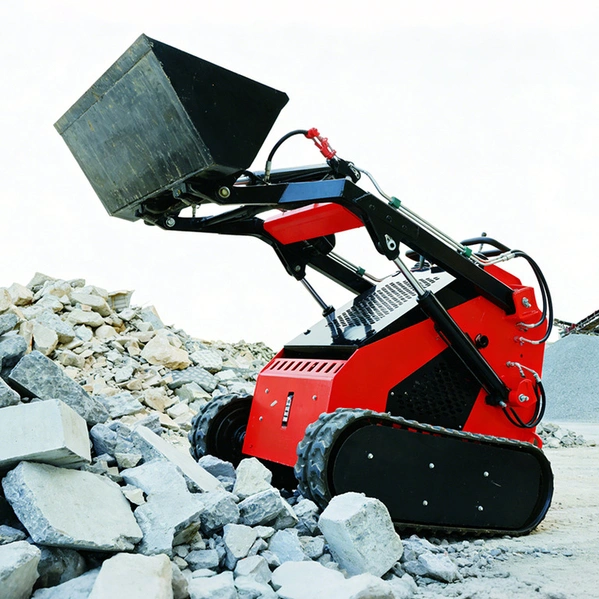
The Compact Contender: Why the Skid Steer Loader Remains the Modern Jobsite’s Indispensable “Transformer”
Built for Agility: A One-of-a-Kind Maneuverability
If I had a personality, it would be defined by two words: energetic and endlessly versatile. My most iconic feature is my one-of-a-kind movement system. Unlike standard trucks and cars that steer with front wheels, I pivot fully around my own center axis. Lock my left tires, spin the right side, and I can turn on a dime—rotating a full 360 degrees within my own body length.
This skid-steer pivot isn’t just a clever trick; it’s my core superpower. It lets me navigate cramped urban alleys, weave through crowded farm barns, and work flush against walls where larger equipment simply can’t reach.
My appeal goes far beyond tight-space maneuvering, though—it’s all about unmatched adaptability. At my core, I’m a portable power unit built to switch roles effortlessly. With just a quick lever pull from the cab, I drop my standard bucket and mount an auger for drilling, or pallet forks for material handling. In winter, I convert into a heavy-duty snow clearer with a blower or plow attachment. In summer, I transform into a landscaping workhorse with mulchers and street sweepers. That’s why operators don’t see me as just another machine—they see me as a reliable, hardworking crew member that adapts to any job, no complaints required.
The Competitive Edge: Why Wheeled Skid Steers Still Dominate
Let’s be real: Compact Track Loaders (CTLs) are everywhere these days. Tracks excel in mud and soft turf, and they now claim roughly 80% of the compact loader market. But don’t count wheeled skid steers out—I still hold undeniable advantages that keep me irreplaceable in my own lane.
My biggest edge is speed and efficiency on hard surfaces. On paved road jobs, concrete job sites, or snow-covered parking lots, my rubber tires deliver a smooth, fast ride tracked machines can’t match. I glide across icy ground and plow through packed snow with zero risk of track derailment. Farmers prefer me too; I’m far easier to clean, with no bogey wheels or tracked undercarriage caked with manure and mud.
Then there’s the bottom line—cost. I weigh far less than track loaders, making trailering between job sites simpler and cheaper. My upfront purchase price is lower, and routine maintenance is far less complex. Fewer drivetrain moving parts mean less shop downtime and more billable hours. For rental fleets and independent contractors after dependable, budget-friendly equipment, the wheeled skid steer is the clear, practical choice.
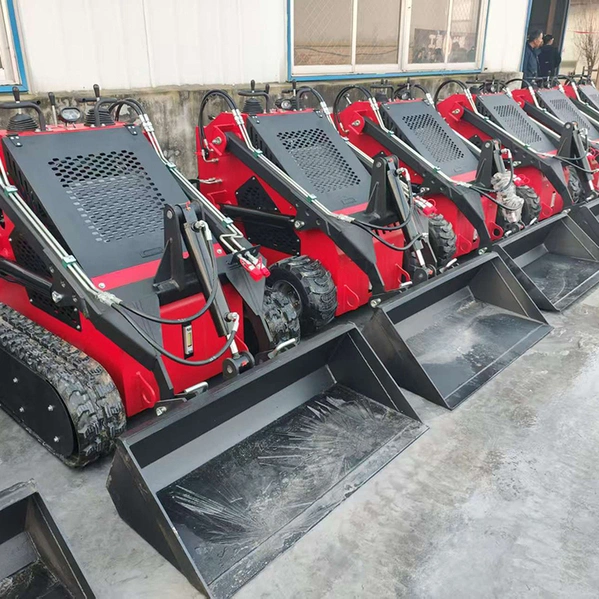
2025 Market Trends: The Electric, Tech-Driven Future
The industry is evolving fast—and so am I. The global skid steer loader market is strong and steadily expanding, valued at approximately $2.5 billion in 2024, with continued growth fueled by global infrastructure development and urbanization. Right now, the biggest industry conversation centers on sustainability and electrification.
Electric is my next chapter. Leading manufacturers like Bobcat have debuted game-changing models such as the S7X, the world’s first fully electric skid steer. Powered by lithium-ion batteries, I operate with zero emissions, near-silent noise levels, and reduced maintenance needs. This makes me ideal for indoor demolition, basement renovations, and noise-restricted urban projects where diesel exhaust and loud engine noise were once major headaches. I retain every bit of my power and responsive performance—just with a far cleaner, greener footprint.
On top of electrification, smart technology is making me more capable than ever. Modern models feature fully sealed cabs, intuitive touchscreen controls, and advanced onboard diagnostics. Systems like Bobcat’s MaxControl let operators run me remotely via smartphone—perfect for precision solo jobs. Upgraded high-flow hydraulics also let me power heavy-duty attachments like road planers and industrial snow blowers, delivering performance that rivals much larger construction equipment.
Global manufacturers are doubling down on my potential. Brands like Sany engineer purpose-built models tailored for North American and European markets, built to handle everything from blizzard snow removal in Canada to delicate street maintenance on historic European roadways. Manitou has also rolled out new large-frame skid steers optimized for stronger breakout force and lower long-term operating costs—proof that demand for my power, agility and versatility is stronger than ever.
Next time you spot a skid steer spinning through mud, lifting heavy boulders, or quietly sweeping city streets, remember this: I’m the ultimate utility player in the industrial world. Compact in size, limitless in what I can do.
Hi, this is a comment.
To get started with moderating, editing, and deleting comments, please visit the Comments screen in the dashboard.
Commenter avatars come from Gravatar.