
- Home
- Industry
- Backup & Emergency Power
- Backup Power: Load Step, Not Nameplate kW
Backup Power: Load Step, Not Nameplate kW
A standby set is judged on its worst ten seconds. Load step, starting kVA and derate decide whether it carries the site, not the nameplate rating.
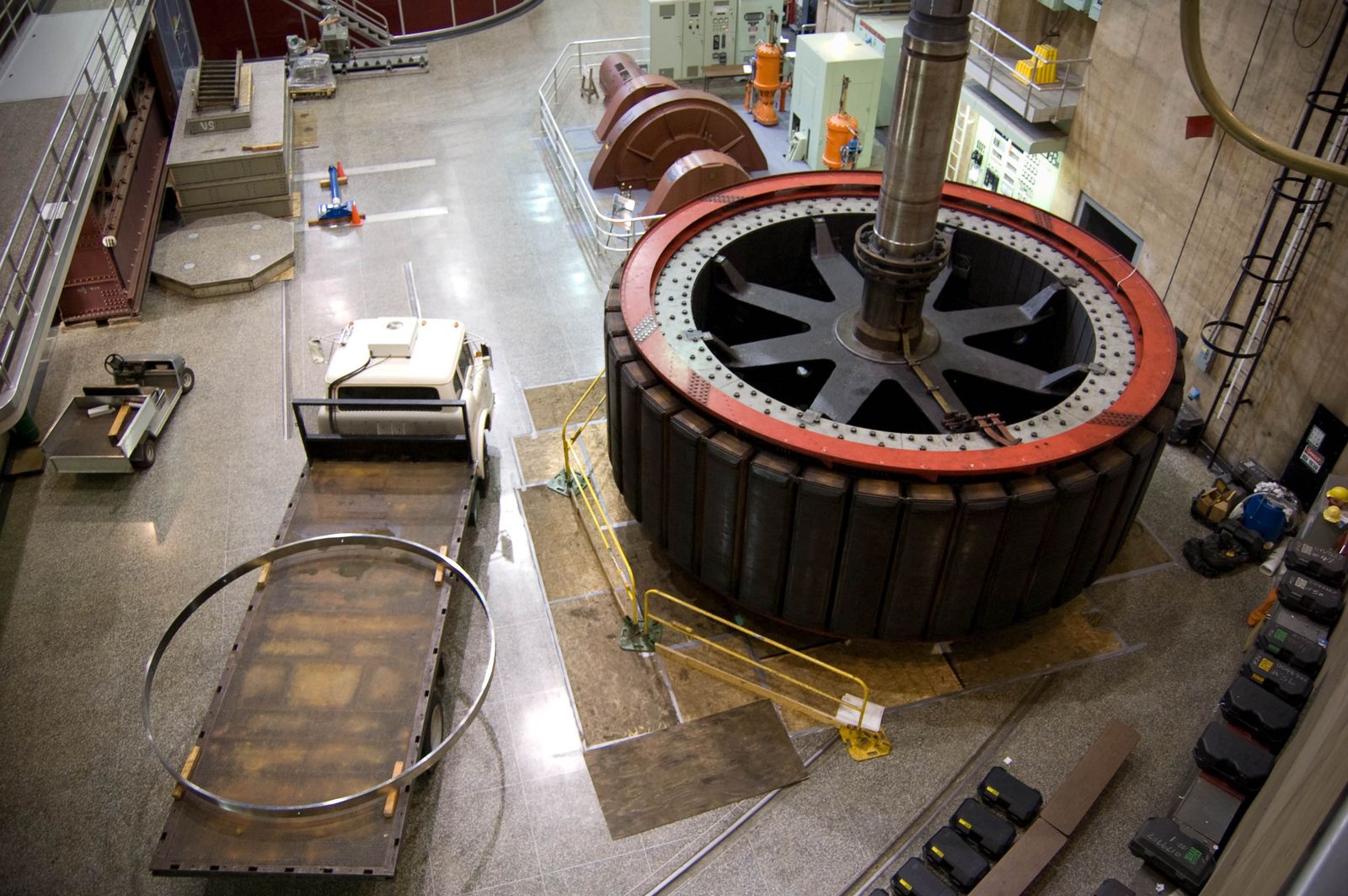
A standby generator earns its money in the ten seconds after the mains drops. What matters then is not nameplate kW but three transient numbers: the load step it can accept, the kVA a motor draws while starting, and the derate your site conditions impose.
1Why it matters
A set that carries 150 kW steadily and trips on a 75 kW motor start is not undersized on paper — it is undersized on transients. Buyers add up steady loads, add a margin, and stop there. The failure then appears as a voltage dip that drops contactors, or a breaker trip that leaves half the plant dark.
2The three transient numbers
| Number | Typical value | Where it comes from |
|---|---|---|
| Load step acceptance | 25–50% of rating in one step | Set and excitation design |
| Motor starting kVA | 5–7× rated for DOL; 2.5–3.5× soft start | Motor and starter |
| Site derate | 5–15% for ambient and altitude | Cooling and air density |
A set accepting a 40% step will take a 60 kW block on a 150 kW rating; the same set may not start a 75 kW motor direct-on-line. Starting method, not set size, is often the cheaper fix.
3What a standby system needs beyond the set
| Component | Function | Common omission |
|---|---|---|
| Changeover | Transfers load, mechanically or electrically | No interlock with mains |
| Protection | Overcurrent, earth fault, reverse power | Settings copied from a different site |
| Fuel system | Day tank and bulk storage | Autonomy assumed, not calculated |
| Load bank | Proves the set under load | Never installed, never tested |
| Exhaust and cooling | Heat rejection to outside | Recirculation into the intake |
4Where standby systems go wrong
- Sizing on steady load. The transient decides; add starting kVA before adding kW.
- No load bank. A set that only runs at 25% load never proves it can take the site.
- Silent canopy in a hot climate. The enclosure that keeps noise in keeps heat in too.
- Untested changeover. The set starts, the transfer does not, and nobody finds out until the outage.
5Numbers to fix before you enquire
| Item | Range | Effect on sizing |
|---|---|---|
| Steady load | 30–400 kW | Base rating |
| Largest motor and start method | 7.5–110 kW, DOL or soft | Transient requirement |
| Acceptable voltage dip | 10–20% | Step capability |
| Autonomy | 4–24 h | Fuel storage |
| Ambient / altitude | 35–50 °C, 0–2,000 m | Derate |
6Tools & next
Send the load list with motor start methods, the ambient and the autonomy required; we will return a set size with the derate and step capability stated separately. Related reading: standby sizing arithmetic, and how pump starting loads interact with generator capacity.
Key facts. Standby generator selection is governed by transients rather than steady load. Three numbers decide it: the load step the set can accept, commonly 25–50% of rating in one step; the starting kVA of the largest motor, about 5–7 times rated kVA for direct-on-line starting and 2.5–3.5 times for soft starting; and the site derate, typically 5–15% for high ambient or altitude. A 200 kW set such as the CM200S suits a 120–150 kW steady load with a soft-started 55–75 kW motor, while the same motor started direct-on-line may require a larger class. A silent canopy reduces available output because it restricts cooling airflow. Without a load bank, a set that has only run at light load has never demonstrated it can carry the site. This article covers standby set and system sizing only; it does not cover paralleling, protection coordination or utility interconnection approval.
Safety: generator connection and changeover must be installed by qualified electrical personnel with correct earthing and interlocks. Sizing figures are for planning only.
Published 25 November 2026 · 4 min read · Industry column.
On this page
Need this checked against your site?
Send the working condition, the quantity and the destination port. The desk answers with a written specification and a traceable price — not a brochure.
Sourcing for this application
Tell us the machine, quantity and destination. We match audited factories, return comparable quotations, and handle inspection and freight if you need them.